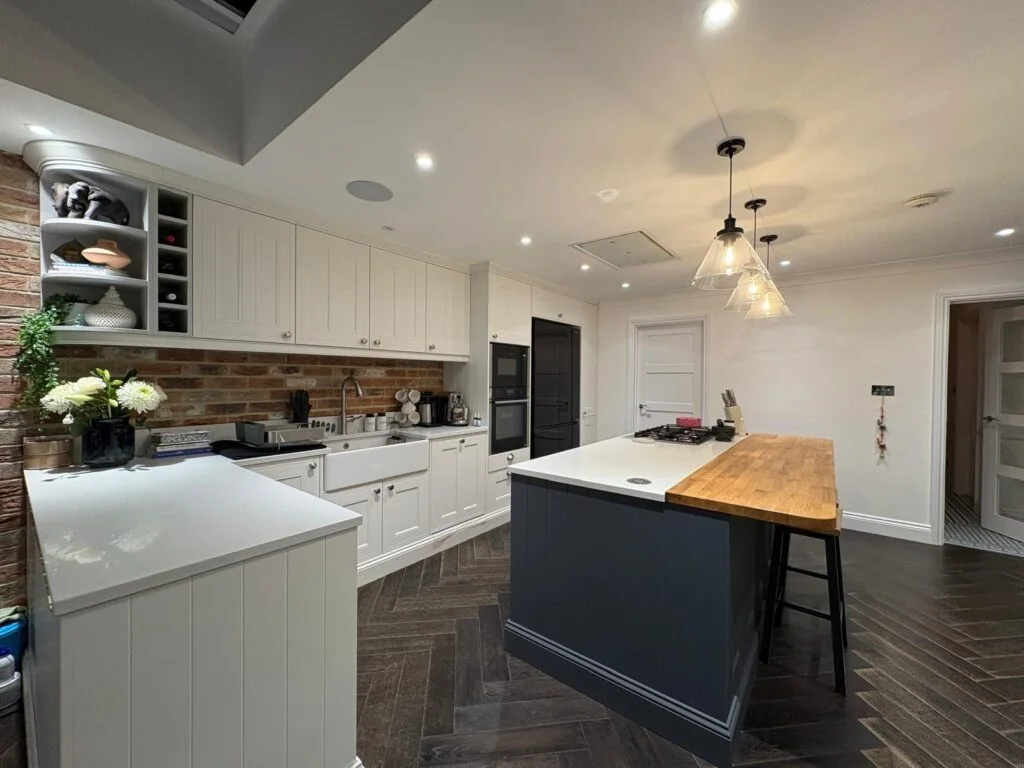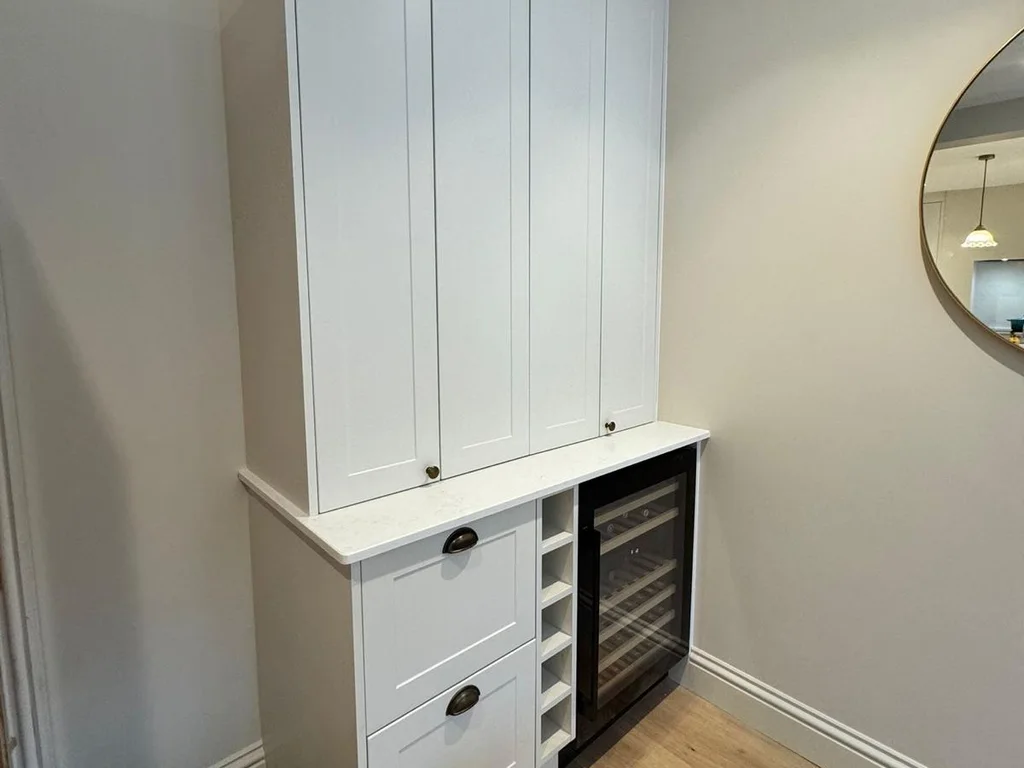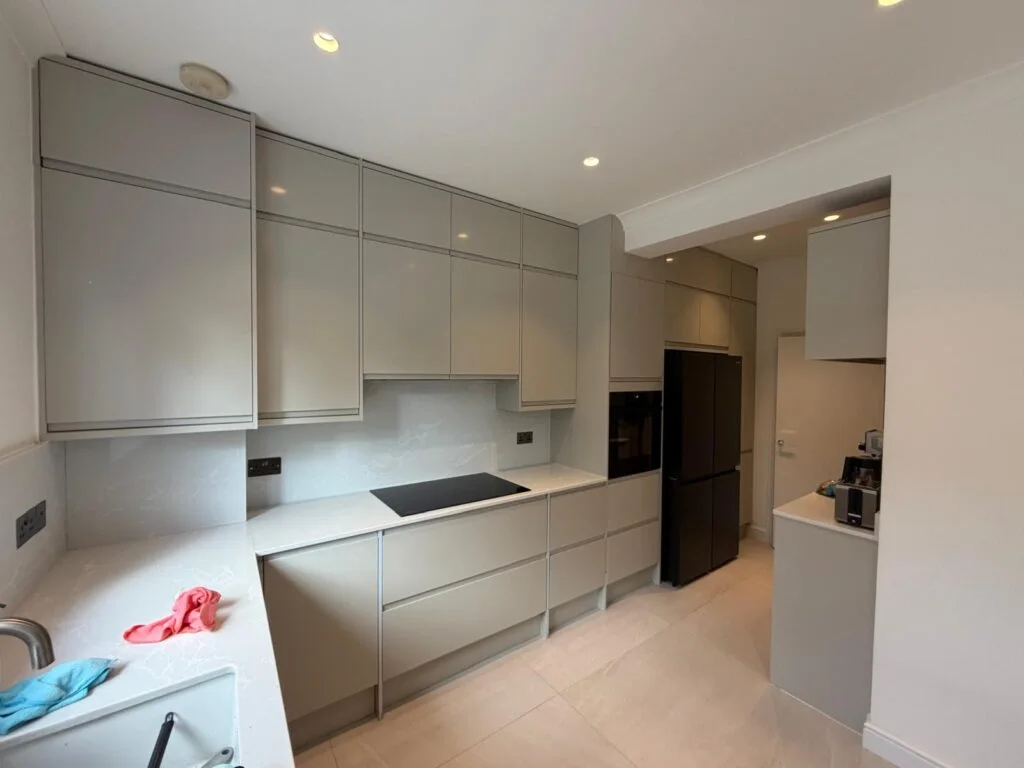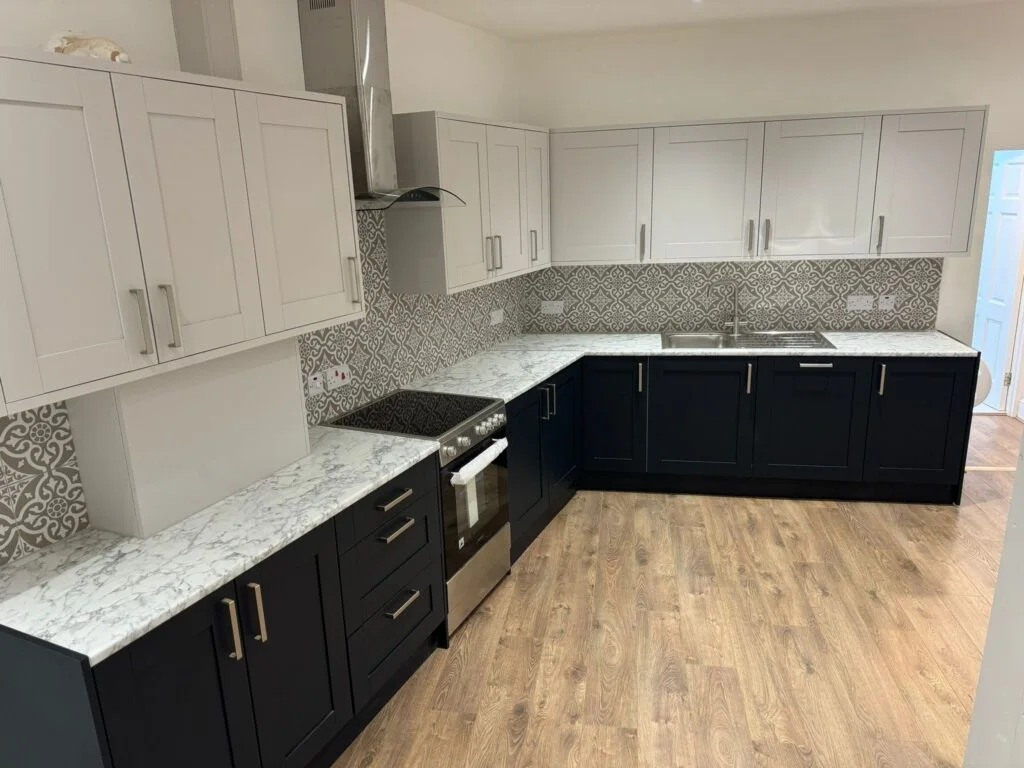
A kitchen budget should cover the finished room, not only the showroom order. List products, fitting, preparation, specialist trades and finishing separately. Add a reserve you choose for unresolved work. The worksheet below totals your own figures and shows what remains unpriced; it does not estimate a Matthew 633 quotation.
Start with what you can spend on the whole project. If that figure is committed to cabinets and appliances before fitting is discussed, every later item becomes a difficult compromise.
Separate confirmed prices from allowances
A written quotation for a defined task is different from a number you have set aside. Label each line in your notes as quoted, estimated by you or still unknown. Keep the supplier’s date and reference next to it.
A zero should mean a task is unnecessary or included elsewhere. It should not mean you have not asked. For example, if waste removal is included in the fitting quotation, enter it there once and note that inclusion. Double-counting makes a project look less affordable; missing it understates the total.
Use the worksheet after gathering these figures. Empty fields remain visibly unpriced, so a partial total is not mistaken for a complete budget.
Which costs belong in the plan?
Break the project into practical buying decisions:
- Cabinets, doors, finishing panels and handles.
- Appliances, sink, tap and their required accessories.
- Worktop supply, template, fabrication, fitting and cut-outs.
- Kitchen installation and agreed finishing adjustments.
- Removal of the old kitchen and waste arrangements.
- Plumbing, electrical work and other specialist trades.
- Wall and floor preparation, final flooring and splashbacks.
- Decorating, delivery and other project-specific costs.
Some suppliers combine these items. Use their actual breakdown, then map it to your budget without counting a package twice. Ask whether totals include any applicable VAT. Our quote checklist helps identify missing scope.
Set a reserve against uncertainty
There is no reserve percentage that guarantees a project will stay on budget. A straightforward replacement in a known room and an alteration involving hidden services have different uncertainties. Choose an allowance you can afford and ask the installer which unresolved conditions could change the price.
The worksheet lets you enter a percentage for arithmetic convenience. It is your planning assumption, not a recommended industry allowance. Applying it to a partial subtotal does not account for costs that have not been entered.
List the reasons you might use it: repairs revealed during strip-out, a product change you request, or extra work identified by a specialist. A reserve is not permission for anyone to carry out unapproved extras. Agree how changes will be priced and authorised.
Test decisions against the complete total
Consider an illustrative choice. A homeowner prefers a more expensive worktop, but the new option also requires a specialist visit and separate sink reconnection. Comparing only the material price understates the change. Add every affected line before deciding.
The same logic applies to moving the sink or adding an island. Cabinets may represent only part of the extra work. A fitter can help you identify what needs pricing, even while the design is still provisional.
If the total exceeds your limit, change one decision at a time and keep the previous version. You will see which compromise actually reduces the project cost. Our guide to reducing renovation costs explains where to start.
Plan when payments fall due
An affordable final total can still create a cash-flow problem if several payments arrive together. Record the payment stages in each supplier and installer agreement. Compare them with delivery, the start of fitting and any specialist visits.
Do not infer payment terms from this worksheet. It tracks amounts, not contracts or finance. Keep copies of agreed quotations and changes with your budget so you can explain the difference between the original plan and the current one.
Use your figures for a better design conversation
Bring the complete budget, your preferred layout and your priorities to a free kitchen design discussion. Tell Dan which figures are confirmed and which still need a quote. That makes it easier to discuss practical changes without guessing what you can spend.
Contact Matthew 633 with your postcode and plan for a project-specific quotation. Use the calculator below to organise the numbers before that conversation.