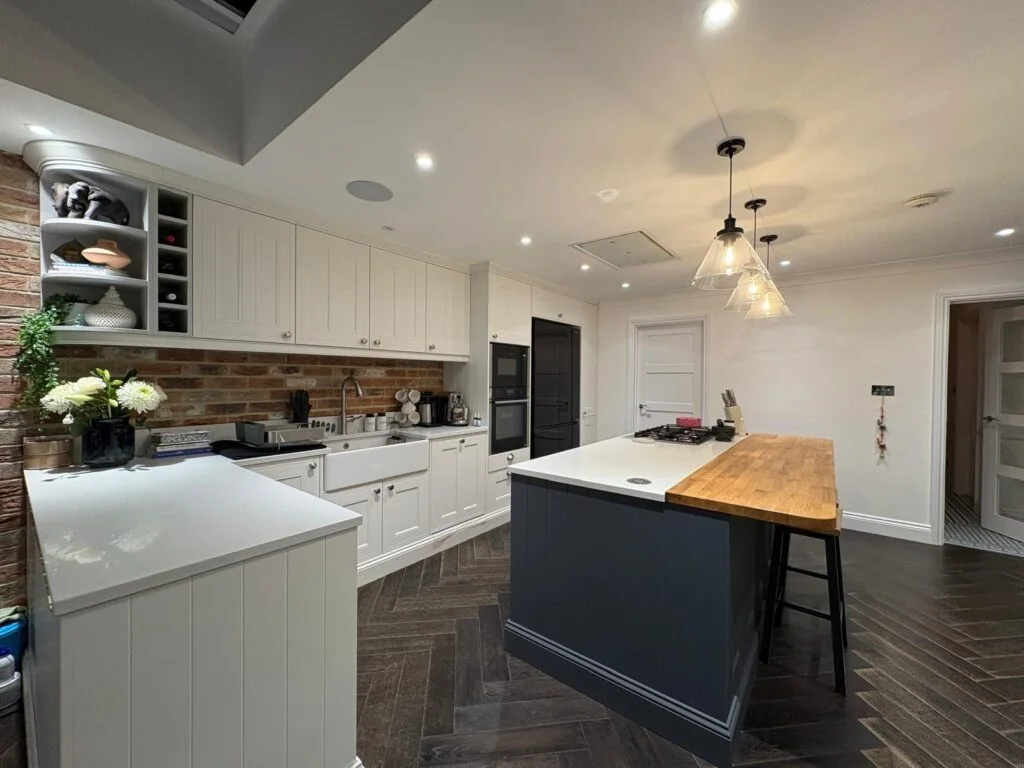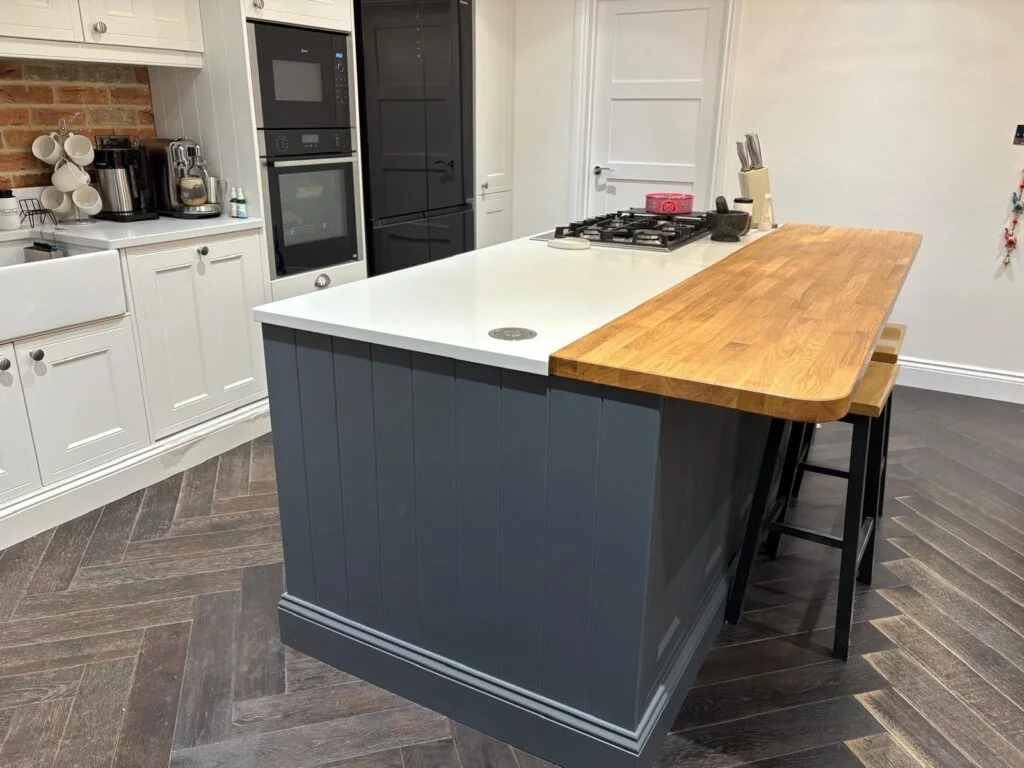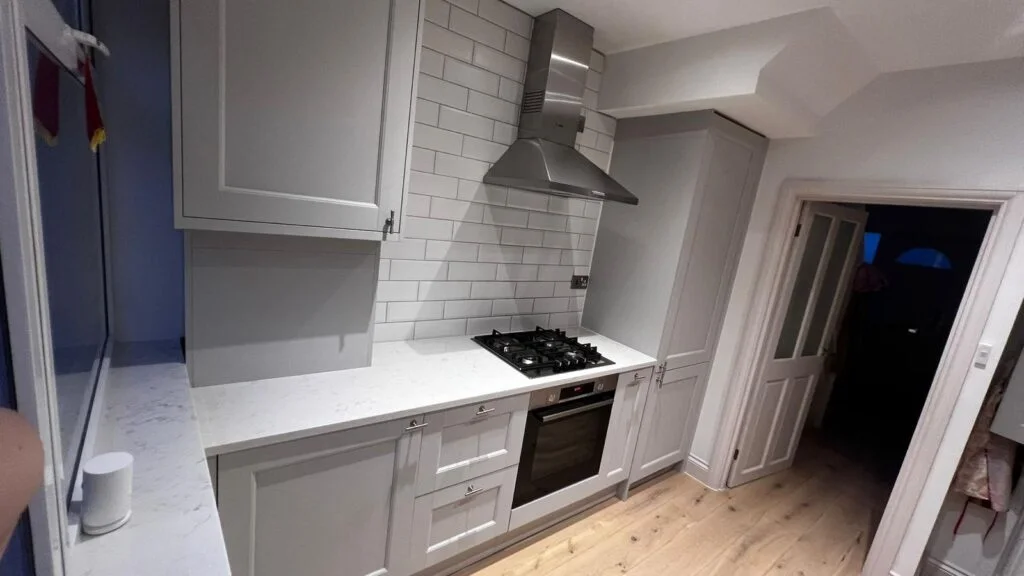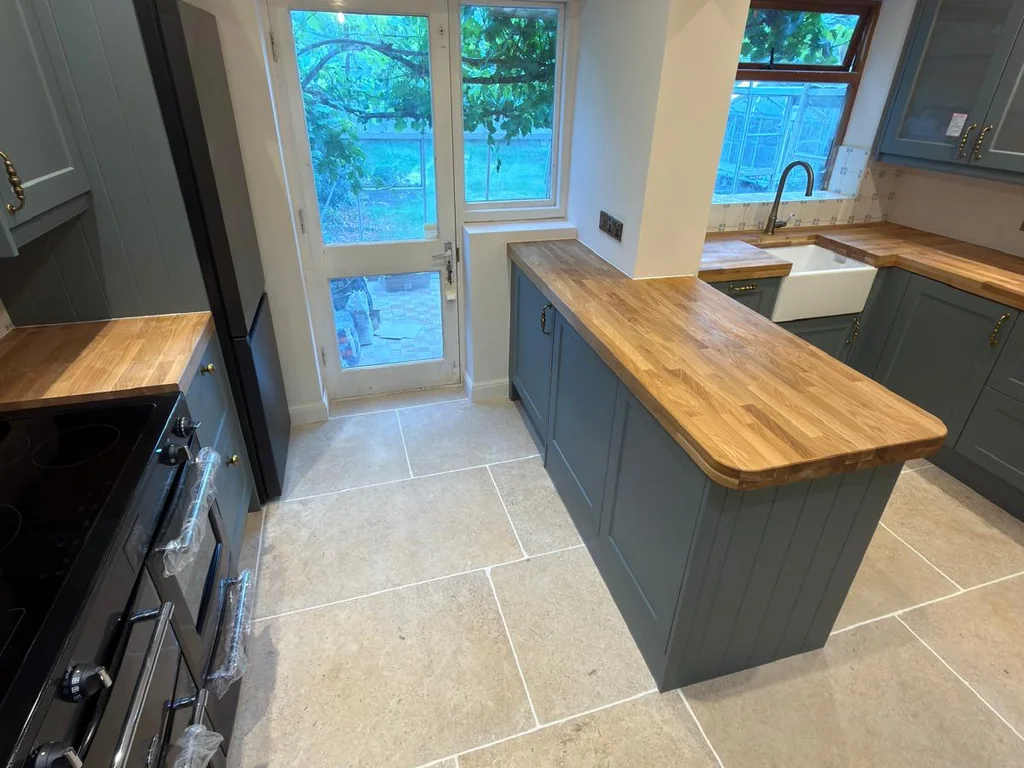
Refurbishment makes sense when the parts you intend to keep are sound, suitable and worth building around. Replacement may be a better fit when the layout no longer works, units are damaged or the proposed changes affect most of the room. Have the existing kitchen assessed before deciding that new doors or a worktop will solve the problem.
The right comparison is between two defined scopes. “A refresh” can mean a few changes or a substantial job with several trades. Name the work before comparing the cost.
Is the problem appearance, condition or layout?
Separate what you dislike from what is damaged or difficult to use. Dated handles are a different issue from swollen units, drawers that cannot open properly or a layout that puts the only preparation space in the wrong place.
List the parts you would keep if they worked well with the proposed changes. Then list the things that must improve. If those lists conflict, discuss the trade-off before ordering replacement parts.
Photograph the inside of the cabinets as well as the doors. Areas around a sink or an old leak deserve attention. If there is an active problem, ask the appropriate professional to identify and address it before planning a cosmetic finish around it.
Can the existing cabinets accept the changes?
Replacement doors, hinges, drawer fronts and panels need to fit the actual cabinets. Similar-looking products are not enough. Check dimensions, fixing arrangements and availability with the supplier and fitter.
If you want a new worktop, discuss the condition and suitability of the units beneath it. Ask what removal may affect, including the sink, splashback and nearby finishes. Keeping the cabinets does not mean every other part can stay untouched.
Avoid buying components simply because they are described as a common size. Bring the product details to the conversation first. A small saving on a part is not useful if fitting it requires work you had not budgeted for.
What would a fuller replacement change?
A replacement gives you an opportunity to reconsider the room. It also brings removal, preparation and installation decisions. Moving the sink or appliances can add work beyond the cabinetry.
Ask for a layout that addresses your actual frustrations. More cupboards may help, but so might a different drawer arrangement or a clear stretch of worktop. Read our small-kitchen planning guide for a way to test the proposed design before ordering.
If you are keeping the same layout, say so. A full replacement does not have to include every possible change. The scope should follow what the room needs and what you want to spend.
Compare the complete job
For each option, write down the products, fitting, removal, associated trades and finishing work. Include any separate worktop appointment. Ask which items have firm prices and which depend on an inspection or final product choice.
Think about disruption as well as the total. Ask when the kitchen will be out of use and whether the work can be completed in one sequence. A smaller-sounding refurbishment can still involve several appointments.
Our cost guide and quotation checklist help you compare like-for-like work. There is no honest universal saving percentage for keeping cabinets. Their condition, the chosen products and the labour required decide that.
How can Matthew 633 help?
Our kitchen refurbishment service starts with the existing room and the changes you want to make. Customer feedback includes renovations involving flooring, wall preparation and other trades. The exact work for your home must be discussed and included in your quotation.
Send Dan photographs, your postcode and a short list of what you want to keep and replace. If you are unsure, say so. We can discuss the options and what needs checking before you commit to a new kitchen or a refurbishment.