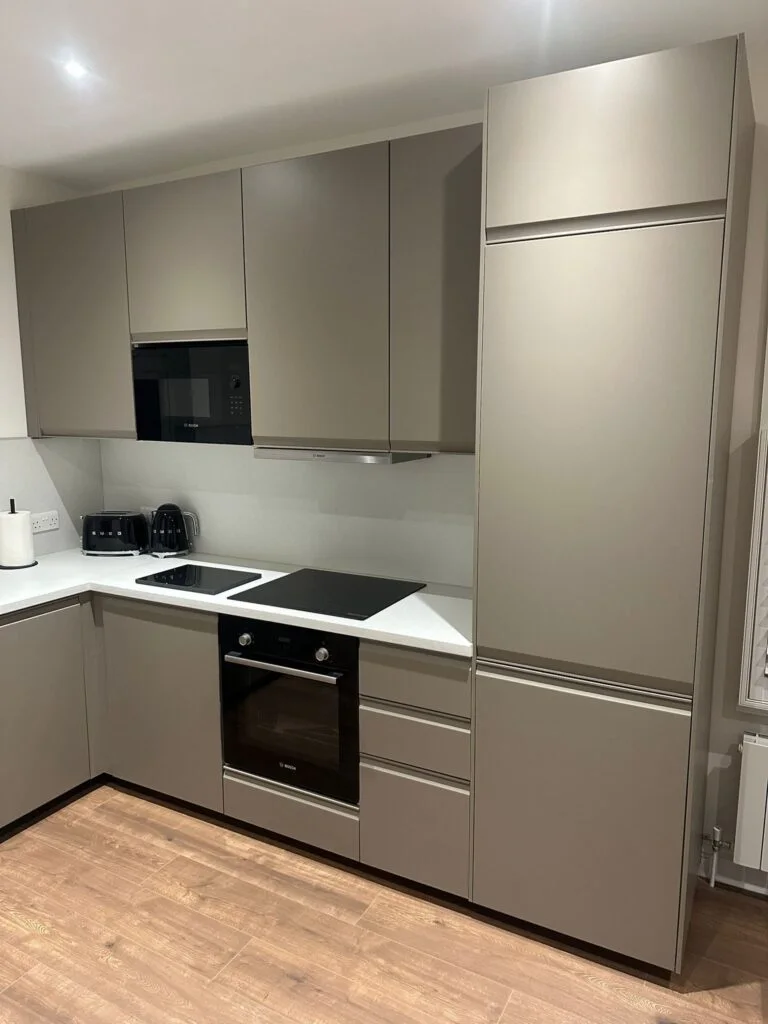
Before kitchen delivery, confirm access, a suitable storage area and who will check the order. Compare delivered items with the current item list, photograph problems and report them through the supplier’s process. Tell the fitter promptly about missing components that could affect the installation sequence.
Delivery day is a handoff between the order and the job on site. Treat it as a planned stage, with someone available who knows what is expected, rather than an appointment that will look after itself.
Confirm what the delivery service includes
Ask the supplier where the goods will be unloaded, whether there are access restrictions and what happens if the vehicle cannot reach the property. Describe steps, narrow passages, shared entrances and any parking constraints before the date is fixed.
Check whether the service includes taking goods into the intended storage area. Do not assume a delivery team will carry everything upstairs or unpack the order. Arrange help through the supplier or installer if the agreed service does not cover what is needed.
Keep the delivery contact and order reference available. If the time changes, tell anyone whose work or access arrangements depend on it.
Prepare dry, secure storage
Agree a place that meets the supplier’s storage requirements and allows safe access around the goods. Cabinets, long panels and appliances take space, and you may need to keep some items stored while the room is prepared.
Avoid blocking exits or the route the fitter will use. Do not stack products in a way that risks damage or makes heavy lifting necessary just to find one component. Follow the supplier’s handling guidance.
Consider how the items will move into the kitchen in the order needed. A labelled storage plan can help if the order is spread across more than one room, but do not unwrap or rearrange heavy products merely to make the pile look organised.
Use the final item list
Compare delivery paperwork with the latest agreed order, not an earlier quotation. Check references and quantities for cabinets, fronts, panels, plinths, handles and accessories. Keep appliance models on a separate list if that makes them easier to verify.
Some items may arrive separately or be intentionally supplied later. Mark those clearly and confirm the expected dates. A known later delivery is still something the fitting schedule must account for.
Ask the supplier how and when to inspect for damage, including any reporting deadlines. Follow those instructions. Do not assume signing a delivery sheet replaces the need to report a problem through the correct channel.
Record a problem so someone can act on it
Photograph the affected product, label, packaging and damage where relevant. Note the order reference and item code. Send the report through the supplier’s stated process and retain the response or case reference.
Be specific with the fitter. “One part is missing” gives less useful information than the cabinet or panel reference and its position on the plan. The fitter can then explain whether other work can continue.
Do not substitute a similar-looking part or agree a product change without checking the installation implications. The replacement may alter the surrounding layout or finish.
Decide whether the room is ready for fitting
Product arrival alone does not make the room ready. Check that agreed preparation is complete, required trades have attended and the installer has the current drawing. If several conditions remain unresolved, discuss the start date before the team arrives.
Some shortages can be managed around; others stop a sequence. Agree any effect on return visits and cost rather than assuming every delay is included in the original price. Our installation timeline guide explains why dependencies matter.
The interactive checklist below helps you keep these questions visible. It records progress on this page only and does not confirm site readiness or send anything to Matthew 633.
Keep the records until handover
Retain delivery paperwork, product references and the messages about shortages until the kitchen is complete and all outstanding items are resolved. They can also help with later product enquiries.
If the supplier changes the delivery date, tell the fitter immediately and ask which other bookings need review. Avoid making a new sequence based solely on one updated delivery message.
For a kitchen around Watford, contact Dan with the current delivery position and your plan. Matthew 633 can discuss fitting around the actual order and room preparation, including questions to settle before the start.